2026 NFPA 855 Chapter 9 9.2.1 Testing
Aug 13, 2026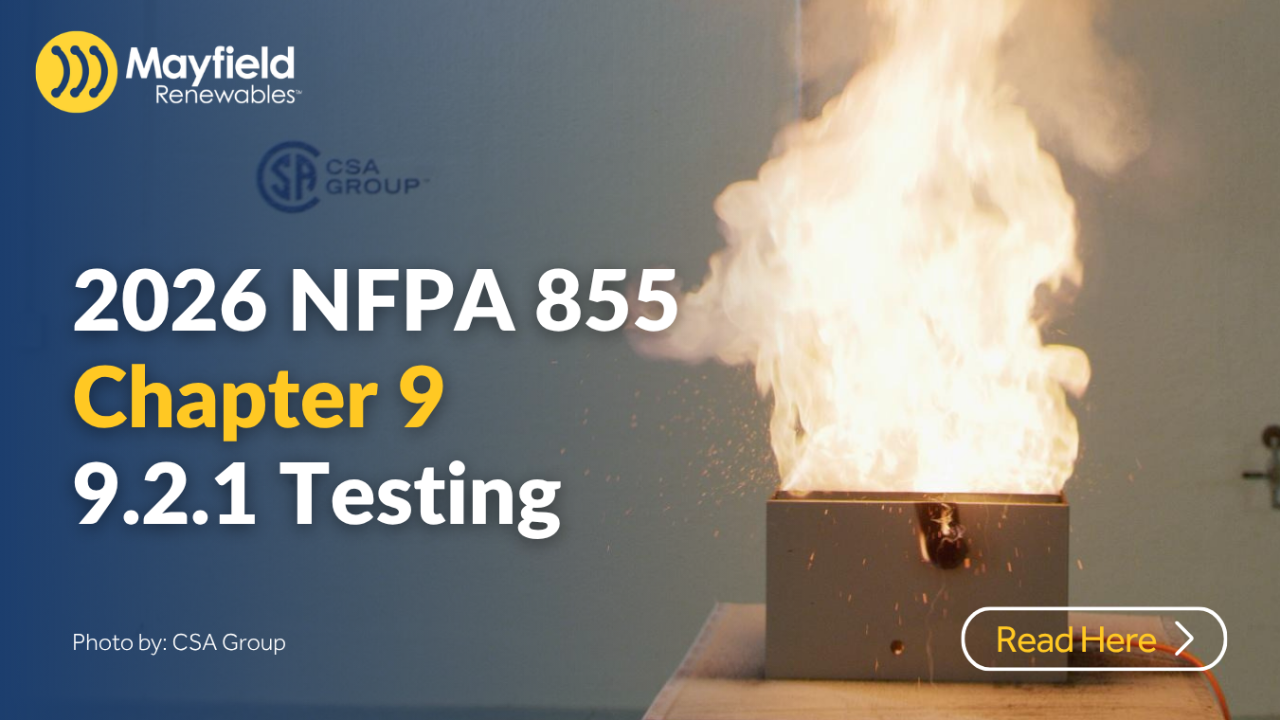
The 2026 edition of NFPA 855, the standard for the installation of stationary energy storage systems, introduces a testing requirement that closes a long standing gap in how energy storage systems (ESS) are evaluated for fire risk. For the first time, “intentional ignition” of flammable gases is now part of the required testing protocol under certain conditions. Here is what changed, why it matters, and what it means for your next ESS installation.
Section 9.2.1: Testing Requirements and the Role of 9540A
Section 9.2.1 sets the baseline for fire and explosion testing under NFPA 855. It requires that a “representative ESS be tested in accordance with UL 9540A and large-scale fire testing, collecting data on gas production at the cell level, thermal runaway propagation potential at the module level, and propagation potential between ESSs.”
Previous editions left a gap in UL 9540A intended and what the code actually delivers. The 2026 edition closes that gap by tying the required testing more directly to large-scale fire testing, giving installers, manufacturers, and authorities having jurisdiction a clearer picture of how a system behaves under worst-case conditions. Certain lead acid, aqueous nickel based, and aqueous metal air battery types remain exempt under specific conditions, but this will not apply to most lithium-ion installations.
What Is Thermal Runaway?
Thermal runaway is the self heating of an electrochemical system in an uncontrollable fashion. In a battery cell, this means the cell reaches a point where it generates more heat than it can dissipate, causing it to consume itself in a cascading reaction that cannot be stopped once it begins. It is classified as a “fire condition,” by code though the cell does not necessarily ignite during the process.
This distinction matters because NFPA 855 treats thermal runaway and ignition as two separate events that both require testing. A system can enter thermal runaway and release flammable gases without ever catching fire, which is why the 2026 edition now requires additional testing to evaluate what happens if those gases are intentionally ignited.
Section 9.2.1.2: Testing for Flammable Gas Release
NFPA 855 section 9.2.1.2 addresses what happens when a cell- or module-level test results in the release of flammable gases during thermal runaway. In these cases, the 2026 edition now requires an additional unit-level test that involves intentionally igniting the vent gases to assess the fire propagation hazard. This closes a gap that existed in earlier editions, where flammable gases were identified but never actually tested under ignition conditions.
This requirement gives manufacturers, installers, and authorities having jurisdiction a much clearer picture of worst case behavior. Rather than relying on assumptions about how released gases might behave if ignited, NFPA 855 now demands direct evidence from testing, which enhances our understanding of ESS product safety and can improve coordination with first responders and fire marshals.
Section 9.2.1.2.1: Verifying Fire Won't Propagate Between Units
Once ignition testing confirms a fire hazard exists, Section 9.2.1.2.1 determines what happens next. It requires that large-scale fire testing be conducted or witnessed and reported by an approved testing laboratory, which must characterize the composition of the gases generated and “demonstrate that a fire involving one energy storage system unit will not propagate to an adjacent unit.”
This requirement shifts the burden of proof onto documented, third-party verified testing rather than assumption or design intent. For anyone specifying or approving an installation, it means fire propagation mitigation between units is not just a design goal but a tested and reported outcome.
Section 9.2.1.2.2: Spacing Between Outdoor Enclosures
Spacing decisions for outdoor installations are no longer left to general clearance assumptions. Section 9.2.1.2.2 requires that proposed spacing between multiple enclosures be analyzed using anticipated wind conditions, since wind directly affects how released gases disperse around a site, and then validated through large-scale fire testing conducted in accordance with Section 9.1.
A registered design professional must also review the results to verify that complete combustion of one enclosure will not propagate to adjacent enclosures. This adds a layer of engineering accountability on top of the laboratory testing, ensuring that spacing decisions are grounded in both physical testing and professional judgment.
Why These Changes Matter for Energy Storage Installations
Taken together, the 2026 updates to Section 9.2 close gaps that have existed between code intent and actual testing outcomes for years. By requiring intentional ignition testing, third-party verified propagation testing, and wind-informed spacing validation, NFPA 855 now demands direct evidence rather than assumption at nearly every stage of the fire safety evaluation.
Installers, manufacturers, and authorities having jurisdiction are left with fewer open questions when reviewing a proposed system. Testing data now speaks directly to the scenarios that matter most in the field, giving everyone involved a stronger foundation for approving and building safer installations.
Conclusion
The 2026 edition of NFPA 855 raises the bar on what testing has to prove before an energy storage system reaches the field. Intentional ignition, propagation between units, and enclosure spacing are no longer theoretical considerations, they are tested and documented outcomes that shape how systems get approved and installed.
Join us at the Mayfield Renewables Education Summit, taking place in Chicago on September 29th and 30th, 2026, with sessions covering UL 9540A and large scale fire testing. Backed by two decades of engineering experience, the sessions walk attendees through the process step by step and show how to apply these test reports to actual installations. Reserve a seat and spend two days deepening your understanding of fire testing standards alongside the engineers who wrote the book on them.
Frequently Asked Questions
Do the test reports required under NFPA 855 need to be reviewed by anyone beyond the testing laboratory?
Section 9.2.2.2 requires that the test report be accompanied by a supplemental report from a registered design professional with expertise in fire protection engineering, who interprets the test data in relation to the specific installation requirements of the system.
Who reviews and approves the final test report?
The complete test report and its supporting data must be submitted to the authority having jurisdiction for review and approval under Section 9.2.2.1.
Does NFPA 855 allow enclosures to be stacked?
Stacked enclosures are permitted under 9.2.1.3.1, provided large-scale fire testing demonstrates that a fire will not propagate beyond the stacked enclosure.