706.15(B): Location and Control of Energy Storage Disconnects
Apr 10, 2026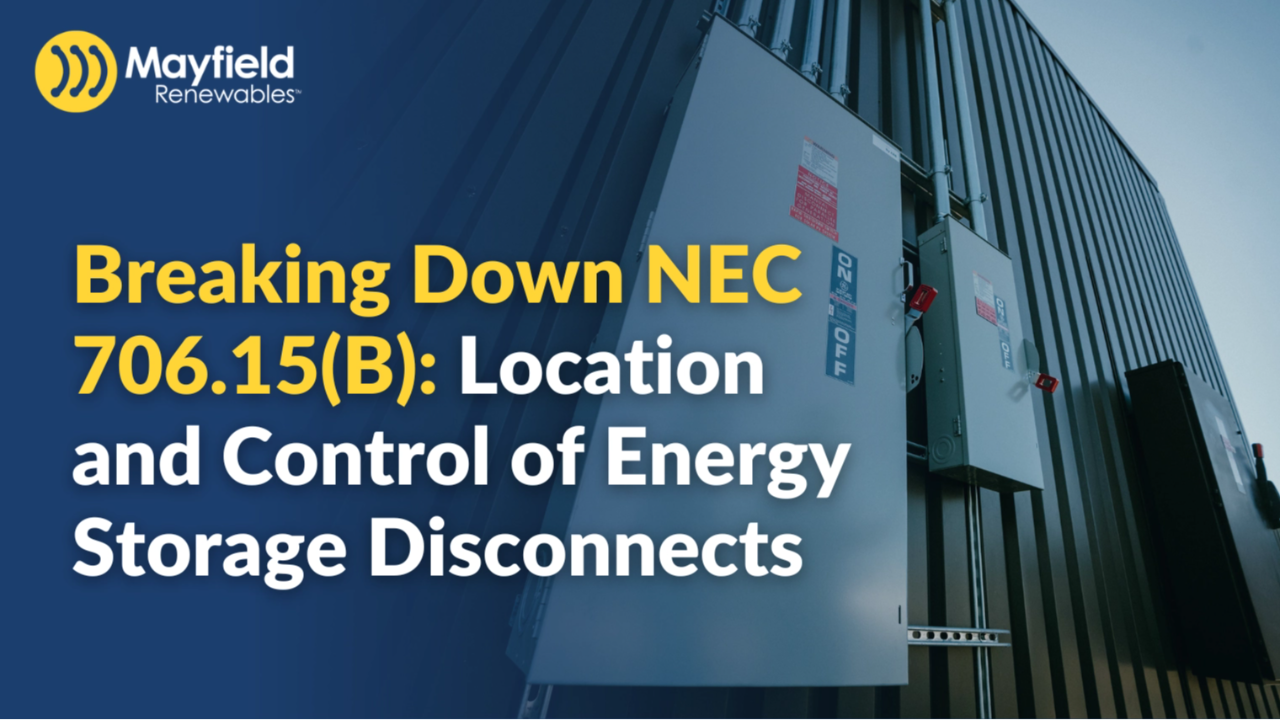
Back in 2023, we saw many changes to the National Electrical Code (NEC). One change that didn't get much attention was the expansion of section 706.15 from four (A through D) to five (A through E) subsections. One of those subsections, 706.15(B), clarified and reorganized the requirements for location and control of the energy storage system (ESS) disconnecting means, and added “emergency shutdown function” language for one- and two-family dwellings. In this article, we’ll do a deep dive into 2023 NEC 706.15 requirements and their applications for commercial energy storage systems.
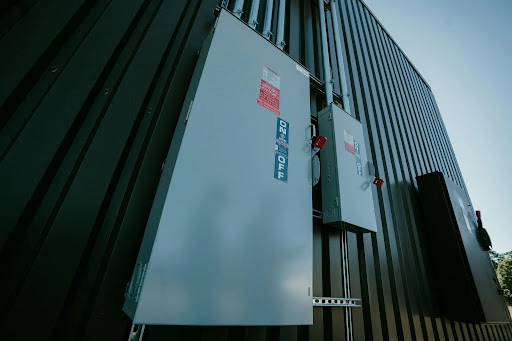
What does NEC 706.15(B) cover?
Generally speaking, section 706.15 covers disconnecting means requirements for ESS installations. The 2023 NEC version of 706.15(B) indicated that the disconnecting means must be readily accessible and comply with at least one of the following:
- Be located within the ESS
- Be located within sight and within 10 ft (3 m) from the ESS
- Where not located within sight of the ESS, the disconnecting means, or the enclosure providing access to the disconnecting means, shall be capable of being locked in accordance with 110.25
110.25 lays out the locking provisions for disconnects. Namely, that the means to lock the disconnect must be integral to the disconnect itself or not readily removable, and must be lockable in the open (off) position.
Understanding the “Located Within the ESS” Rule
706.15(B)(1) permits the required ESS disconnecting means to be located within the ESS enclosure, provided it is readily accessible in accordance with 706.15(B) and installed in accordance with the equipment’s listing and labeling. This allows manufacturers to integrate disconnecting means into listed ESS equipment, thereby simplifying installation and system design.
This approach works well for compact rooftop or wall-mounted systems with limited space. But accessibility remains key— tool-free access is required to meet the "readily accessible" standard. As with many terms, be sure to look at the definitions article if you are uncertain on the requirements for accessibility.
Understanding the "Within Sight and Within 10 ft (3 m)" Rule
706.15(B)(2) allows the ESS disconnecting means to be located within sight of and within 10 ft (3 m) from the ESS. This modifies the general NEC section 110.29 definition of "within sight," which permits up to 50 ft (15 m) via direct line of sight without obstructions like walls or floors. The tighter 10 ft straight-line distance requirement in 706.15(B)(2) ensures first responders can quickly see and access the ESS disconnect during time-sensitive emergency situations.
Installations where the ESS is located near a service panel or subpanel are good fits for 706.15(B)(2). Installers should measure the unobstructed path carefully, as any barriers or distance overruns will require shifting to another method of compliance with 706.15(B). Visibility remains essential to meet the "readily accessible" standard alongside this rule.
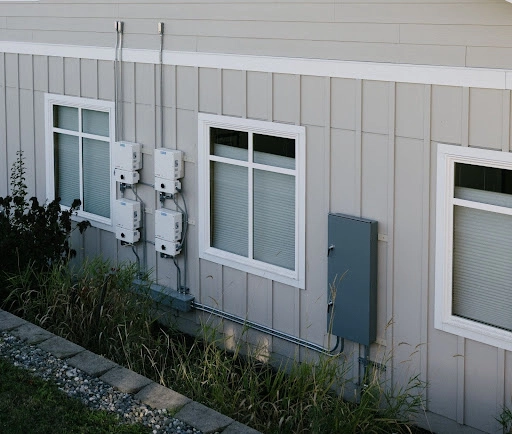
What about when the disconnect is remotely located?
Where the disconnecting means is not within sight of the ESS, it (or the enclosure providing access to it) must be capable of being locked per 110.25. This section requires disconnects to accept a padlock—either factory-installed on the equipment or added in the field—without permanent locking, but ready for standard locks. Temporary lockout/tagout setups don't count since they aren't code-approved here.
Remote disconnects can be useful for projects with multiple ESS units aggregated into a single AC aggregation panel, or for PV arrays with several string inverters feeding a single combiner panel. Circuit breaker panelboards qualify if they have a hasp or similar for a padlock, providing flexibility for larger-scale microgrid designs.
What if the disconnect is more than 10 feet away?
Which takes precedence: the NEC allowance for remote locations, or the 10 ft guidance?
The answer is subjective and project-specific. Installers only need to comply with one of the three options presented in 706.15(B). For example, if site constraints are such that you must install a disconnect 15 ft away and around a corner from the ESS, 706.15(B)(3) is your clearest path to compliance.
If you want to stay up to date on all the 2023 NEC changes, including 706.15(B), take our course on Critical Updates to the 2023 NEC and get up to speed.
Conclusion
NEC 706.15(B) clarifies ESS disconnecting means requirements by splitting them into three compliance options that engineers can select from based on site constraints.
Are you looking for an engineering partner who can navigate consulting on product selection and value engineering opportunities? Reach out to discuss how we can support your team today.
Interested in learning more through Mayfield Renewables technical education? Check out our individual workshops on codes and standards on our website!