Introduction to the 2024 International Fire Code (IFC) Section 1207: Electrical Energy Storage Systems
Jul 15, 2026
Energy storage systems have become a standard add-on for many solar installations, bringing with them a corresponding set of fire and life safety requirements. The 2024 International Fire Code (IFC) addresses these systems in Section 1207, covering stationary and mobile energy storage across technologies including lithium-ion, lead-acid, flow batteries, and non-electrochemical systems such as flywheels and thermal ESS. With two decades of design engineering consulting experience, Mayfield Renewables brings a practical, code-focused perspective to these requirements.
Before applying any specific requirement, it helps to consider the Code's stated scope. The IFC addresses energy storage fire and explosion hazards, the safe handling of storage equipment, protection of building occupants and the public, and the safety of firefighters and emergency responders. These goals provide context for the general provisions in 1207.1 covered in this article, including applicability thresholds, permitting, and construction documentation.
Key Points
- Section 1207 governs stationary and mobile electrical energy storage systems.
- Table 1207.1.3 sets energy capacity thresholds by technology, with lithium-ion at 20 kWh.
- Residential systems follow a much lower 1 kWh threshold under Section 1207.11.
- Section 1207.1 establishes the general permitting and documentation requirements.
The Purpose and Scope of the International Fire Code
The International Fire Code establishes the regulatory framework for mitigating fire and explosion hazards across buildings, materials, and equipment, including the structures, devices, and systems that present a risk to occupants and the public. Its scope explicitly covers the handling and use of hazardous materials and devices, which brings energy storage equipment directly within its jurisdiction. The Code also governs the construction and installation of fire protection systems, a requirement that carries direct implications for energy storage installations that depend on sprinklers, suppression equipment, or detection systems as part of their design.
A thorough understanding of this scope is essential before applying any individual section of the Code. It defines the parties the Code is designed to protect, including building occupants, the general public, and the firefighters and emergency personnel tasked with responding to an incident. Section 1207 extends these same principles to electrical energy storage systems specifically, establishing the regulatory basis for the requirements addressed throughout the remainder of this article.
An Overview of Section 1207 and Its Subsections
Section 1207 organizes electrical energy storage system requirements into a comprehensive set of subsections addressing the full lifecycle of an installation, from commissioning and decommissioning to ongoing operation and maintenance. The section distinguishes between installation types, outlining separate requirements for indoor, outdoor, rooftop, and mobile energy storage systems, along with dedicated protection measures based on the specific electrochemical technology in use.
The structure of Section 1207 clearly divides commercial and residential applications. The earlier subsections establish requirements primarily suited to commercial and industrial installations, while Section 1207.11 addresses residential (“Group R-3 and R-4”) occupancies directly, applying a separate and in many ways more restrictive set of provisions to residential systems. Identifying which subsection governs a given project depends largely on occupancy type, and the Code directs readers accordingly throughout the section.
General Requirements Under Section 1207.1
Section 1207.1 sets the general requirements that apply broadly across electrical energy storage system installations, and many later subsections reference back to these foundational provisions. This section addresses several key areas, including permitting, construction documentation, hazard mitigation analysis, and large-scale fire testing, each of which establishes obligations that carry forward into the more specific requirements found later in Section 1207.
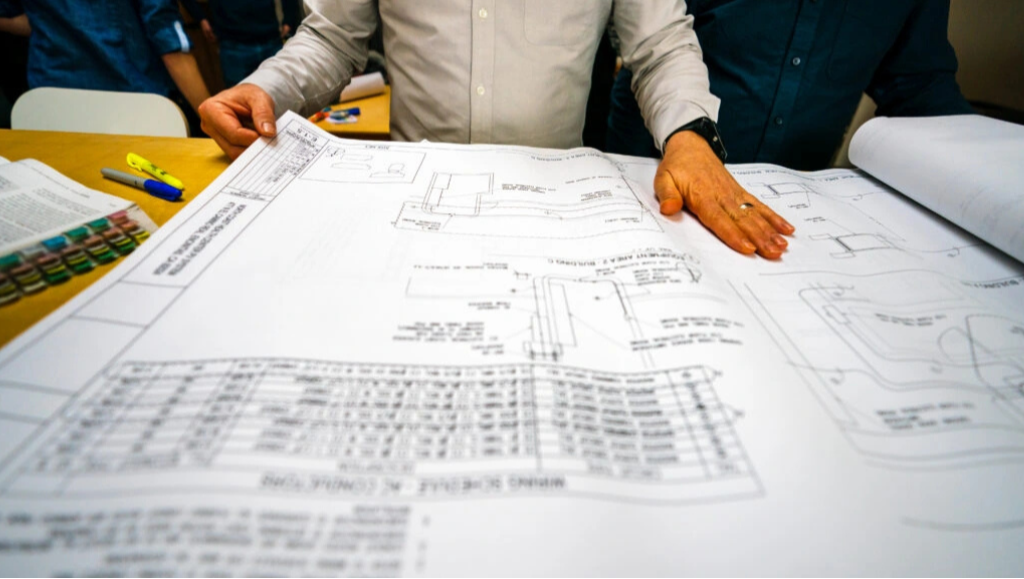
Permits are required for both the construction and operation of stationary energy storage installations, and applicants must submit detailed construction documents that include the installation's location and layout, fire resistance ratings, equipment specifications, and commissioning and decommissioning plans. Where an installation involves an energy storage technology not specifically addressed elsewhere in the Code, exceeds the maximum allowable quantities of Table 1207.5, or where multiple technologies interact within the same fire area, a hazard mitigation analysis may be required to evaluate potential failure modes. Large-scale fire test data may also be necessary to go beyond baseline size, separation, and other design- and installation-related requirements.
Energy Storage Threshold Quantities in Table 1207.1.3
Table 1207.1.3 establishes the energy capacity thresholds that determine when Section 1207 applies to a given installation. The table lists these thresholds by technology type, recognizing that different energy storage chemistries carry different levels of hazard and therefore warrant different regulatory triggers. Lithium-ion batteries, the most common technology in commercial solar-plus-storage applications, carry a threshold of 20 kWh, while lead acid- and nickel cadmium- based systems are set at 70 kWh, and flow batteries also fall at 20 kWh.
These thresholds apply specifically to commercial and non-residential installations. Section 1207.11 amends this framework considerably for residential applications, reducing the threshold to a single kilowatt-hour for systems installed in Group R-3 and R-4 occupancies. This substantial reduction means that nearly any residential energy storage system of meaningful size falls under the requirements of Section 1207, making the distinction between commercial and residential thresholds a critical consideration early in any project's design process.
How Commercial and Residential Applications Differ
Section 1207 draws a clear line between commercial and residential energy storage installations, with each pathway carrying distinct requirements suited to the scale and occupancy type involved. Commercial and industrial installations fall under the general provisions of Sections 1207.1 through 1207.10, addressing everything from equipment listings and installation clearances to fire suppression and technology-specific protection measures. Residential installations, by contrast, are governed primarily by Section 1207.11, which applies to the location of electrical ESS near or in Group R-3 and R-4 occupancies and introduces its own set of location restrictions, energy rating limits, and impact protection requirements tailored to dwelling units.
The threshold at which the code applies also differs significantly between the two paths, as outlined in the previous section, with residential systems subject to a far lower capacity trigger than their commercial counterparts. Design engineers working across both markets should treat this distinction as a starting point for any project, since it determines which subsections of Section 1207 govern the remainder of the design and permitting process.
Conclusion
This overview establishes the foundational scope, structure, and threshold requirements that govern electrical energy storage systems under the 2024 International Fire Code. Understanding these general provisions in Section 1207.1, along with the distinction between commercial and residential applications, provides the necessary groundwork before working through the more technical protection requirements found later in the section.
Future installments in this series will address the specific protection measures outlined in Sections 1207.5 through 1207.9, covering topics such as fire suppression system design, exhaust ventilation, explosion control, and the distinct requirements for indoor, outdoor, and rooftop installations. Design engineers and system designers working on commercial and industrial energy storage projects are encouraged to follow along as each subsection is addressed in turn.
FAQs
When does a project require a hazard mitigation analysis?
A hazard mitigation analysis, such as a failure modes and effects analysis, is required in four scenarios: when an installation uses an ESS technology not specifically listed in Table 1207.1.3, when multiple technology-types are installed within the same fire area with potential for adverse interaction, when the analysis is being used as the basis for increasing maximum allowable quantities (see 1207.5.2), or when the fire code official identifies a hazard not addressed by existing code provisions. See 1207.1.6 ‘Hazard mitigation analysis’ for more detail.
Does the IFC require large-scale fire testing for every energy storage installation?
No. Large-scale fire testing in accordance with UL 9540A is only required where specifically referenced elsewhere in Section 1207, such as when seeking approval for reduced separation distances or increased maximum allowable quantities. It is not a blanket requirement for all installations. That said, Section 1207.3.1 requires that the ESS be listed to UL 9540, and part of the listing process is the completion of a UL 9540A test. So, one could argue that large-scale fire testing is required indirectly, anytime UL 9540 is the technology type’s listing.
Are mobile energy storage systems held to the same thresholds as stationary systems?
Mobile ESS deployed at a utility substation or generation facility for 90 days or less do not count toward the stationary system's threshold values in Table 1207.1.3, provided the mobile unit complies with Section 1207.10 and is used only while the stationary system is being tested, repaired, or replaced.
What happens if an energy storage system is damaged in a fire?
The system owner, agent, or lessee is responsible for mitigating the hazard or removing the damaged equipment, at their own expense. In some cases, the fire code official may require trained fire mitigation personnel to be on site within 15 minutes of dispatch until the equipment is safely removed (See 1207.1.8 Fire remediation).