The Difference Between Listings, Codes, and Standards in Solar + Storage Engineering
Apr 14, 2026
Codes, standards, and listings are terms that are used frequently and sometimes interchangeably in the solar + storage industry. That overlap can make it difficult to understand what actually matters when you are designing, installing, or reviewing a project. Getting a clear picture of how codes, standards, and listings interact can influence approvals, what equipment can be used, and whether work can proceed on time.
Codes, standards, and listings are often mentioned together, but they serve different purposes. Codes set the rules that must be followed, standards explain how to test or evaluate compliance, and listings show that a product or system meets those requirements.
Key Points
- Codes become legally enforceable when adopted by a jurisdiction.
- Standards define how to meet safety and performance expectations.
- Listings confirm that a product or system complies with specific standards.
- Codes often reference standards, which in turn rely on multiple layers of testing and verification.
- Not everything referenced in a code is independently enforceable.
What is a Listing?
A listing is a formal certification that a product or system meets a specific standard. Nationally recognized test laboratories issue listing certifications after evaluating equipment against safety and performance criteria. For example, UL 9540 is the listing standard for stationary energy storage systems
Listings are what bridge the gap between theory and application. While standards define the requirements, a listing confirms that a real product has actually met them. This is why codes frequently require equipment to be “listed” rather than requiring compliance with every underlying test directly. The listing simplifies enforcement by giving authorities a clear, verifiable benchmark.
Listings often depend on multiple layers of standards. A system-level listing may require compliance with component-level standards, which themselves rely on more detailed performance testing. Returning to the UL 9540 example, a battery energy storage system listing can include a battery (UL 1973) and power conversion system (UL 1741) that have also been evaluated to their respective listing standards.
What are Codes?
Codes are sets of safety and quality guidelines that become legally enforceable when adopted by a jurisdiction. Examples include the National Electrical Code and fire codes such as the International Fire Code (IFC). On their own, these documents are not enforceable, but once adopted by a state or local authority, they become law.
These codes are what installers, designers, and engineers must ultimately follow. They define requirements such as system size limits, setbacks, ventilation, and installation practices. If a project does not meet the adopted code requirements, it will not pass plan review or inspection, regardless of whether the equipment itself is high quality or well designed.
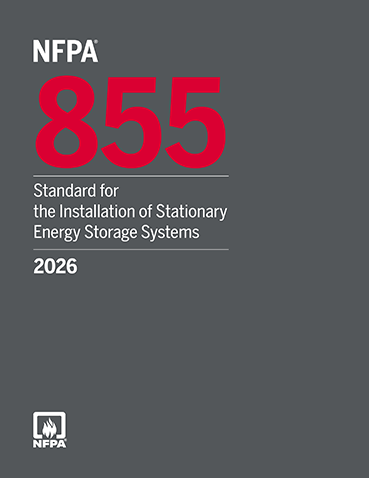
Another important aspect of codes is that they do not exist in isolation. They frequently reference standards and listings to define acceptable equipment and methods. Instead of detailing every technical requirement, codes point to recognized standards and require that equipment be listed accordingly. This allows codes to stay focused on enforceable outcomes while relying on standards for technical depth. For example, the IFC references a standard for the installation of stationary energy storage systems, NFPA 855.
What are Standards?
Standards define how products, systems, and components are evaluated to ensure they meet safety and performance expectations. If a code tells you what needs to be done, a standard explains how to achieve it. These documents are more detailed and are used by manufacturers, testing laboratories, and sometimes inspectors.
There are different levels of standards. Qualification standards establish the baseline requirements a product or system must meet to be considered safe and functional. All of the listing standards thus far (UL 9540, UL 1973, UL 1741) can be considered qualification standards.
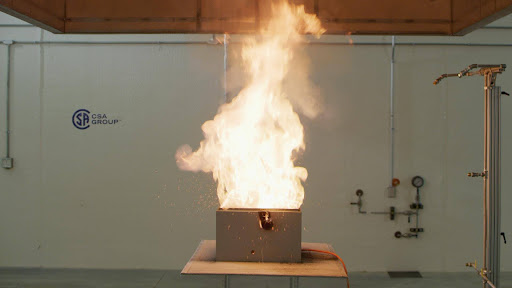
Performance standards go even further by defining how specific functions or safety features are tested. A classic example of a performance standard is the UL 9540A test method to assess thermal runaway propagation and large-scale fire hazards for energy storage systems. The UL 9540A tests evaluate how the system performs under extreme conditions and provide the data needed to support higher-level standards and to develop additional fire, electrical, and other design criteria. As you move deeper into standards, the focus becomes more specific and technical, supporting the broader requirements set by codes.

What’s actually required?
What is actually required depends on what your jurisdiction has adopted. Once a code is adopted by an AHJ, its provisions must be followed, and anything it references becomes part of that compliance pathway. This often includes requirements that equipment be listed to specific standards. Note that many AHJs will adopt and then amend a model code such as the IFC. The opening sections to a state-level code will typically include references to the model codes on which it is based. The Washington State Fire Code is largely the International Fire Code adopted with some slight amendments, as just one example.
Standards and performance tests are not typically enforced on their own. Instead, they are incorporated into the process through listings and code references. For example, a code may require that an energy storage system be listed to UL 9540. That listing, in turn, requires compliance with multiple underlying standards and tests. The installer does not need to individually prove compliance with each test. The listing serves as that proof.
This structure exists to streamline enforcement and ensure consistency. Authorities having jurisdiction rely on listings as a clear indicator that equipment meets the necessary criteria. At the same time, manufacturers and testing organizations handle the complexity of standards and performance testing behind the scenes. The result is a system where codes define the requirement, standards define the process, and listings confirm compliance.
Conclusion
Understanding how codes, standards, and listings work together makes it much easier to navigate project requirements and avoid delays during permitting and inspection. Instead of treating these terms as interchangeable, recognizing their roles helps clarify what is enforceable, what is referenced, and how compliance is demonstrated.
If you want to go deeper into how these requirements apply to real projects, including fire codes, energy storage standards, and system design considerations, you can explore our full course library.
Mayfield Renewables is an engineering consultancy specializing in commercial and industrial PV and microgrid engineering. Contact us today for a consultation.
Interested in learning more through Mayfield Renewables technical education? Check out our individual workshops on codes and standards on our website!